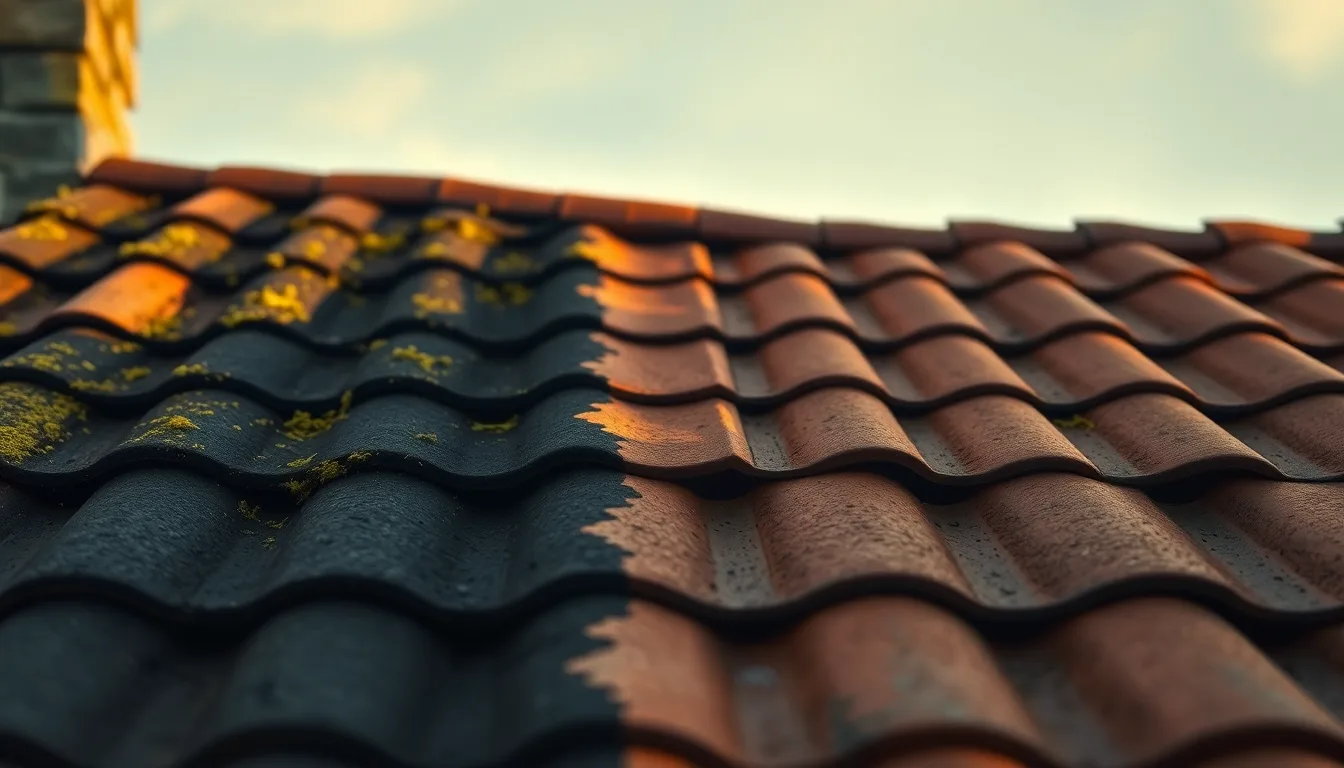
A moss-covered roof is one of the most common things homeowners ask us about. Usually, it looks unsightly rather than being actively leaking. The honest answer is that moss itself is mostly a cosmetic issue. However, left unchecked for years, it can contribute to real problems.
How moss affects a roof
- It holds moisture against the tile. Moss acts like a sponge, keeping the tile surface damp for longer after rain than a clean tile would be. Over many years, that extra moisture can accelerate wear on some tile types, particularly on north-facing or heavily shaded slopes that dry out slowly.
- It can lift tiles slightly as it grows into the gaps between them, which in turn can let wind-driven rain get further under the tile than it normally would.
- It sheds into gutters. Moss that washes off during heavy rain is one of the more common causes of blocked gutters, which — as covered in our guide to common leak causes — can itself lead to water backing up under the lowest course of tiles.
- It’s rarely the direct cause of a leak on its own. In most cases we survey, moss is a sign that a roof would benefit from a clean, not evidence the roof needs replacing. If you are seeing actual leaks alongside heavy moss growth, it’s worth having the roof properly assessed to check whether something more serious is going on underneath.
Soft-wash cleaning vs pressure washing
This is the important distinction. A pressure wash blasts water at high force directly at the tile surface. Because of that force, it can strip the protective granules off concrete tiles, force water up under them, and in some cases crack older tiles outright. It can do more harm than the moss itself.
A soft-wash treatment uses a biocide solution applied at low pressure to kill the moss, algae and lichen at the root, followed by a gentle rinse. The moss then dies back and washes away naturally over the following weeks, with no mechanical stress on the tiles or fixings. This is the method we use, since it’s the approach most roofing trade bodies recommend over pressure washing.
When it’s worth removing
- If moss is thick enough to be visibly lifting tiles.
- If it’s regularly clogging your gutters.
- If it’s affecting a roof that’s otherwise in good condition and you want to protect that condition for longer.
- Simply for appearance, particularly ahead of selling a property.
When it’s not the priority
If a roof already has other issues, such as slipped tiles, failing flashing, or is nearing the end of its working life, cleaning off moss is cosmetic compared to fixing those first. In that case, see our guides on what a new roof costs and chimney repointing, or our roof repairs service, and get those addressed before spending on cleaning.
Whatever the condition of your roof, we’ll always tell you honestly whether a soft-wash clean is the right call, or whether that money is better spent elsewhere. See how to choose a roofer for why that kind of honesty is worth checking for before you hire anyone.
Get in touch for a free assessment of your roof. Since we cover moss removal and anything else the survey turns up, one visit is usually enough, for homes across Wellingborough and the surrounding villages.