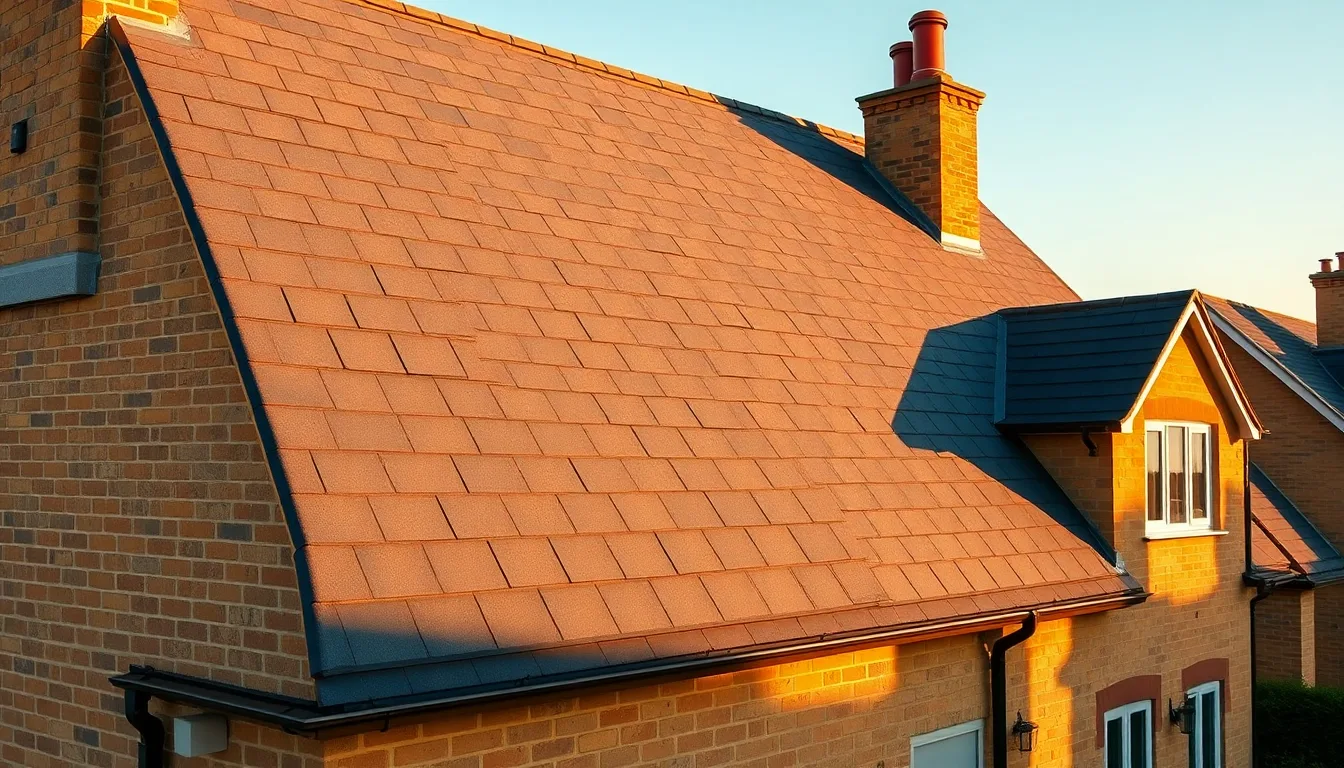
A full re-roof is one of the bigger jobs a homeowner will pay for. As a result, it’s worth going in with a realistic idea of price before you ask a roofer in Northampton round for a quote. The figures below are UK-wide averages from trade cost guides, not our own price list. Your actual quote depends on your roof’s size, pitch, access and condition — which is exactly what a free survey is for.
UK average cost of a new roof
Across the UK, Checkatrade’s 2026 cost guide puts the average roof replacement at around £8,000. Most homeowners pay somewhere between £4,000 and £19,000, depending on size and material. Per square metre, total installed costs (materials and labour) typically run from about £120 to £275/m². Labour alone averages around £130/m².
Material choice moves that range a lot:
| Material | Typical cost per m² |
|---|---|
| Plain concrete or clay tiles | £120–£230 |
| Natural slate | £90–£140+ |
| Flat roofing (felt, GRP, EPDM) | £50–£110 |
A typical three-bedroom semi in Northamptonshire has somewhere between 60 and 100 m² of roof. As a result, a like-for-like tile re-roof often lands in the £8,000–£18,000 range, once scaffolding, felt, battens and disposal are included. That’s before you factor in anything unusual the survey turns up, such as rotten timbers under the old covering.
What moves the price up or down
- Roof shape and access. A simple pitched roof on a detached house with easy access costs less per m² than a hipped or dormered roof, or a terrace that needs scaffolding shared carefully with neighbours.
- Material. Slate generally costs more per m² than concrete tile, but lasts longer, and our flat roofing cost guide covers the equivalent trade-off if you’re comparing a flat extension roof rather than a pitched re-roof.
- What’s underneath. If the survey finds rotten battens, damp sarking felt, or timber that doesn’t meet current building regulations, that gets replaced as part of the job rather than tacked on later.
- Scaffolding. Full access scaffolding for a two-storey house typically adds a four-figure sum on its own, which is one reason two smaller repairs can sometimes cost more combined than one properly planned re-roof.
Repair or replace?
Not every roof problem needs a full re-roof. Although the damage might look serious, a repair is usually the cheaper and faster fix if the roof is otherwise sound — see the signs that mean it’s time to replace, not repair. If you’re already seeing recurring leaks in different spots, that’s often the point where a re-roof starts to make better financial sense than another round of targeted roof repairs.
Do you need planning permission?
For most homes, replacing a roof covering like-for-like doesn’t need planning permission. The Planning Portal confirms that re-roofing which doesn’t change the external appearance is normally permitted development in England, Wales and Scotland. You’re more likely to need permission if you’re changing the roof’s pitch or shape, or converting a flat roof to a pitched one. The same applies if your home is listed or in a conservation area, where permitted development rights can be restricted. Even where planning permission isn’t needed, the work still has to meet current Building Regulations for insulation and structure.
Getting an accurate price
The only way to get a number you can rely on is a free site survey. Quoting a new roof from a photo or a rough size in m² is a guess, not a price. Whether you’re in Daventry or anywhere else across Northamptonshire, we’ll measure the roof and check the timbers and felt while we’re up there. You’ll get a clear, written quote with nothing hidden in the small print. See how to choose a roofer for the questions worth asking before you commit. If a storm has brought the question forward sooner than planned, our storm damage and insurance guide covers what to do next.
Get in touch for a free survey and written quote. Since we measure your actual roof, you get a straight answer, not a national average.